

Upcoming events

Climate health in action: Foundations and practical tools
How is progress made to improve health and health equity while responding to climate change? What tools can researchers, health professionals, policymakers and communities use to create enduring change?
This course is aimed at anyone interested in the connection between climate change and health who would like to increase their knowledge and skills to take action to respond to climate change.
Otago Energy Research Centre (OERC) 20th Annual Symposium 2026
The OERC Symposium 2026 is on November 26 — 27.
The theme this year is: Powering prosperity: An energy transition for people, business and environment.

7 CEFGROUP Sustainable Finance and Reporting Symposium
The Climate and Energy Finance Group (CEFGroup) welcomes submissions of papers for its seventh academic symposium. We welcome papers in all areas of sustainable finance and reporting, such as, but not limited to, topics in climate finance, carbon markets, sustainable investing, greenwashing, sustainability disclosures, net-zero commitments, and AI & machine learning in sustainable finance. All accepted papers will be allocated a discussant.
Keynote Speakers:
Professor Zacharias Sautner (Professor of Sustainable Finance, University of Zurich [Switzerland]. Senior Chair, Swiss Finance Institute)
Professor Paul Griffin (Emeritus Distinguished Professor, University of California [USA]. Honorary Professor, Dept. of Accountancy and Finance, University of Otago [New Zealand])
Call for Papers:
Submission deadline: 14 August 2026
Notification of acceptance (latest): 21–28 August 2026
Submissions and further information: https://blogs.otago.ac.nz/cefg/7th-cefgroup-sustainable-finance-and-reporting-symposium/
Email: CEFGroup@otago.ac.nz

McAuley Oration 2026
Chris Paton is an Associate Professor at the Liggins Institute and the Department of Epidemiology and Biostatistics at the University of Auckland.
2026 Otago Global Health Institute Conference
Information shapes health outcomes. But in today’s global landscape, misinformation can spread faster than evidence, eroding trust and leading to issues such as vaccine hesitancy. At the same time, rapid advances in information technologies—including artificial intelligence—offer new tools for disease surveillance, personalised care, and public health communication. The 18th annual OGHI conference brings together leading and emerging researchers, practitioners, and advocates to discuss these issues and all other aspects of global health. Held in conjunction with the conference is the 2026 McAuley Oration, a free public lecture, which will focus on the conference theme.

Confronting the Climate Crisis: Keeping Hope Alive in Challenging Times
A hopeful public lecture on dealing with the climate crisis.

Insuring the Future: Why insurance for accelerating natural hazards is no longer fit for purpose...and options for reform
Climate change-related risks and damage are accelerating globally, reducing the affordability and availability of property insurance in many countries, including Aotearoa. In the main, the Natural Hazards Commission – Toka Tū Ake (formerly EQC) does not cover climate-related perils, such as flooding, coastal erosion and sea level rise. Nor does it have a mandate to invest in precautionary adaptation measures. It is thus no longer fit for purpose. Drawing on the experience of other OECD countries and proposals in the recent book, Insuring the Future: Reimagining Home Insurance in Aotearoa, this talk will explore the options for reforming natural hazards insurance in Aotearoa to enhance our adaptive capacity, climate justice and societal resilience.
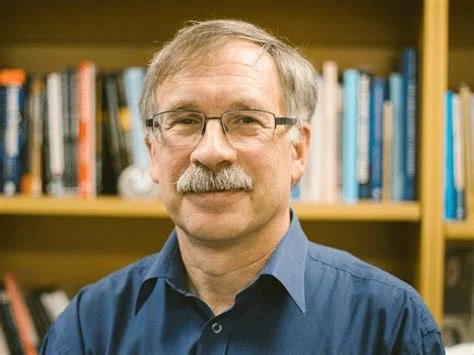
Small Town Development: Unexpected Activity in Challenged Towns Identifying Catalytic Variables
Do catalytic variables impact on lock-in and path-dependence? Join Professor Etienne Nel as he presents evidence from New Zealand and elsewhere.

Ag@Otago Guest Seminar
Ag Innovation are hosting Dr. Roger Hellens from the Kiwifruit Breeding Centre on Monday 5 October to present a seminar.

The Super El Nino - what does it mean for us?
Te Uru Institute for Sustainability, in association with Tūhura Otago Museum, is delighted to bring you this informative free public talk.
Learn about the likely impacts of the coming 'Super El Nino' on Otago and Aotearoa New Zealand, with expert Dr Jen Purdie from the University of Otago.

Regenerative Futures, Imagining Alternatives, Transforming Systems Conference
The conference will bring together people from government, education and research, practitioners, consultancies, and NGO and community sectors, helping solve problems at local-regional-global scales drawing from ecological economics and its transdisciplinary perspectives. Keynotes include Professor Bob Costanza, Professor Anitra Nelson, and Professor Erik Gomez-Baggethun. Abstracts must be submitted by the 14th of August. We invite participants working in the following areas and more:
Beyond Growth and Wellbeing
Indigenous and First Nations Economies
Island and Ocean Resilience
Intergenerational Justice and Stewardship
Climate, Cities, and the Built Environment
Ecological Limits, Governance, and Policy
Transformative Knowledge, Education, Methods, and Technology and
Other Issues in Ecological Economics.
More information can be found on the conference link.
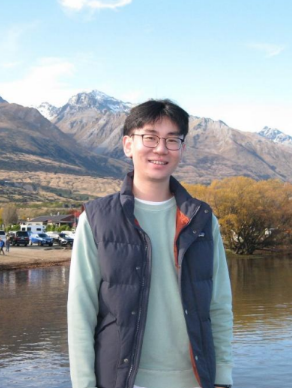
Beyond Electricity Generation: Understanding the Full Emission Impacts of New Zealand's Future Electricity System.
The Centre for Sustainability Research (CSR) and Otago Energy Research Centre (OERC) are pleased to present a research seminar by PhD student Maoxing Liu.

Health equity and climate change adaptation in Kaituna South Dunedin
Climate change is already affecting flooding and sea level rise in Aotearoa, with 2026 starting with eight severe weather states of emergency by February, including the deadly storm that resulted in the Mt Maunganui landslide, and killed 9 people. Flooding has become the country's most expensive hazard, including through its health effects. For the past decade, Kaituna has been at the forefront of national climate change adaptation planning, as the first large urban area facing difficult relocation and major flood management decisions. Since 2020, we have been undertaking a programme of transdisciplinary action research to help decision-makers put health equity at the heart of adaptation in Kaituna. The latest project has been a health effects assessment of the three shortlisted options that were themselves the result of a lengthy community engagement process by South Dunedin Future.

ANZEP Seminar Series
Introducing the ANZEP (Australia New Zealand Environmental Psychology Network) Speaker Series. We plan to organise this as a quarterly seminar series to provide opportunities for researchers and students across Australia and New Zealand (and beyond) to connect, share their work, and engage in discussions on important topics in environmental psychology.
For our first seminar, we will focus on mis/disinformation, and we are very pleased to welcome two scholars working at the forefront of environmental psychology, science communication, and misinformation research.

OERC Seminar Series 2026
Electrification is creating new challenges for electricity networks. Electric vehicles, batteries, solar generation, flexible demand and changing customer expectations are introducing uncertainty that traditional planning approaches were not designed for. At the same time, society expects electricity networks to remain reliable, resilient and affordable while supporting increasing electrification and emissions reduction objectives.